
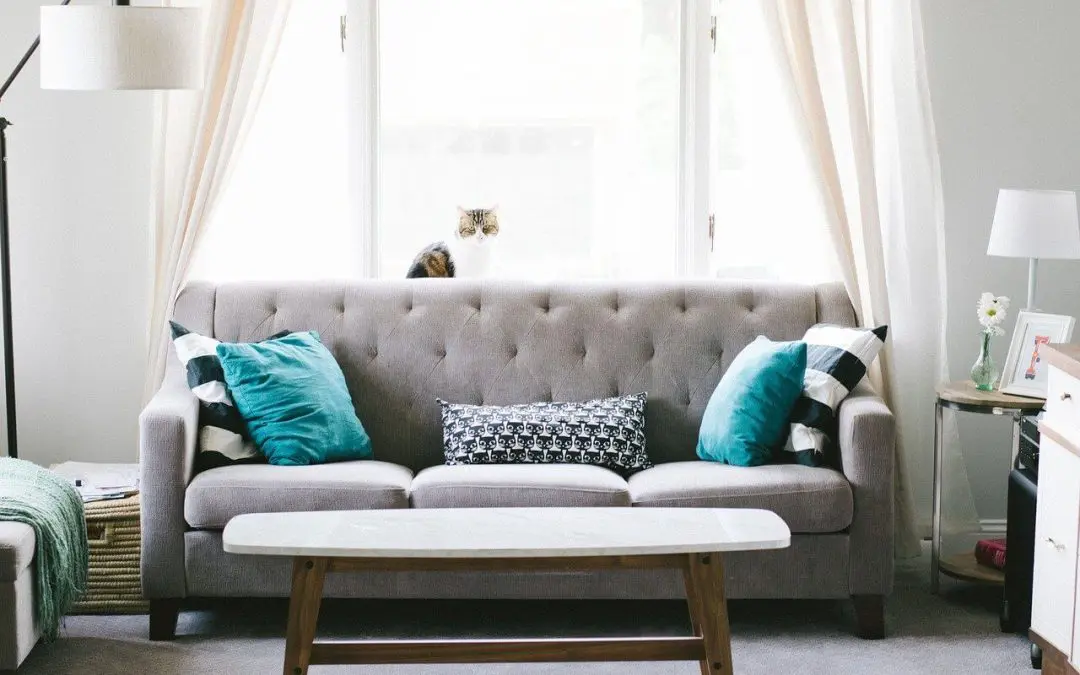
Natural light changes the way a home feels more profoundly than almost any other element. It makes rooms feel larger, more welcoming, and more alive in a way that artificial lighting simply doesn’t replicate. Many homeowners assume that the amount of natural light in a home is fixed, a function of window size and orientation that can only be changed through expensive renovation. In reality, most homes have significantly more potential than they’re currently delivering, and much of it can be unlocked through relatively straightforward changes to window treatments, color, furniture arrangement, and strategic additions that don’t require structural work.
How to Bring More Natural Light Into Every Room
Before adding anything, start by removing the things that are blocking the light that’s already entering the home. Heavy curtains, lined drapes, and decorative valances that cover the upper portion of the window frame block a disproportionate share of incoming light without adding equivalent privacy or insulation value. Replacing them with sheer panels, cellular shades, or top-down bottom-up blinds that allow the upper portion of the window to remain uncovered while maintaining privacy at eye level is a change that immediately transforms how bright a room feels. Outside the window, overgrown foundation plantings, untrimmed shrubs, and vine growth that has crept across window surfaces are the exterior conditions that quietly reduce light over time as the vegetation matures. Furniture placement relative to windows is another factor that most homeowners don’t consider. A large bookcase, armoire, or sofa positioned directly in front of or adjacent to a window doesn’t block the light from entering, but it does interrupt its distribution through the room and cast shadows into areas that would otherwise receive reflected light. Positioning larger pieces of furniture away from window walls allows light to travel further into the room and reflect off more surfaces.
Multiplying the Natural Light You Have
Light doesn’t just enter a room; it bounces. Matte, dark, or heavily textured wall finishes absorb light at the surface rather than reflecting it into the room, while lighter, higher-sheen finishes amplify the effect of every photon that enters. Painting walls in light, warm neutrals with an eggshell or satin finish rather than flat paint is one of the most cost-effective ways to make a room feel significantly brighter without adding a single window. Ceilings painted in a brighter white than the walls reflect light downward and make the ceiling feel higher, which amplifies the sense of spaciousness that good natural light creates. Mirrors are the decorator’s traditional tool for amplifying light, and they earn that reputation. A large mirror placed on the wall opposite or adjacent to a window reflects the incoming light back into the room, effectively doubling the apparent brightness. The placement matters: a mirror that faces a window captures direct light; one that faces a wall captures only reflected light and produces a more subtle effect. Glossy or metallic surfaces on furniture, hardware, and accessories contribute the same reflective effect at a smaller scale.
When the Home Needs More Than Rearranging
When the layout of the home limits natural light in ways that surface treatments and window treatments can’t fully address, targeted additions can make a meaningful difference without full renovation. Solar tubes channel daylight from the roof into interior rooms through a highly reflective tube, delivering natural light to bathrooms, hallways, and other interior spaces that don’t have exterior walls. They’re significantly less expensive and less disruptive to install than traditional skylights, and they deliver a quality of light that closely mimics direct natural light even in rooms far from the building’s perimeter. Interior windows allow borrowed light from adjacent brighter rooms to pass into darker ones. A glass panel above an interior door, or a window cut between a sunny living room and an adjacent hallway, is a relatively modest carpentry project that can transform how light moves through the home’s floor plan.
Frequently Asked Questions (FAQs)
What paint colors maximize natural light in a room?
Warm whites and soft neutrals in an eggshell or satin finish reflect the most light without feeling stark. Pure bright white can feel clinical in some rooms; off-whites and warm whites with yellow or beige undertones tend to feel brighter and warmer simultaneously. The finish matters as much as the color: a satin or eggshell finish reflects noticeably more light than the same color in a flat finish.
Do mirrors really increase the feeling of natural light?
Yes, particularly when placed to reflect an actual light source rather than a wall. A large mirror positioned on the wall directly across from a window reflects incoming daylight back into the room, making the space feel meaningfully brighter. The effect is most pronounced in smaller rooms where the mirror occupies a significant proportion of the wall area.
What window treatments let in the most light while maintaining privacy?
Top-down bottom-up shades allow the upper portion of the window, where most of the sky light enters, to remain uncovered while covering the lower portion at eye level for privacy. Sheer curtain panels filter light without blocking it significantly. Both options deliver substantially more natural light than lined drapes or solid blinds that cover the entire window.
Are solar tubes worth the investment?
For interior rooms, hallways, and bathrooms without exterior walls, solar tubes are a cost-effective way to deliver natural light. They’re significantly less expensive than traditional skylights and don’t require structural modification. The light quality closely resembles direct daylight and adjusts naturally with the time of day and weather, something artificial lighting can’t replicate.
Can trimming outdoor plants really make a difference to natural light indoors?
Surprisingly, yes. Overgrown foundation shrubs and trees that have grown to cover window surfaces reduce incoming light significantly, often without homeowners noticing because the change happens gradually. Professional pruning that restores clearance around windows can produce a noticeably brighter interior, particularly in rooms on the north or shaded side of the home where every bit of available light matters.
TUFF Home Inspections offers home inspections in New Jersey. Contact us to request an appointment.