
Laundry is one of those chores that never ends, so the room where it happens should help, not hinder. A cramped, cluttered laundry room makes the job slower and more frustrating than it has to be. The good news is that you can make a big difference without a remodel. Whether your laundry room is a dedicated space, a closet, or a corner of the basement, a few smart changes in layout, storage, and routine save time and make the room feel better. Here is how to set one up. A little organization can cut the time you spend on laundry and make the room more pleasant to use.
Plan the Flow of Your Laundry Room
Think about how laundry moves through your house. Clothes come in dirty, get sorted, washed, dried, folded, and put away. Arrange the room to follow that path. Place a hamper or sorting bins near the entrance, keep the washer and dryer in the middle, and put a folding surface and hanging space at the end. If you have a small area, even a few shelves above the machines help. Planning the flow before you buy anything keeps the room efficient and prevents wasted steps. Consider how many people use the room, how often you wash, and whether you tend to do large loads or small ones. A family of five may want a double hamper and extra shelf space, while a couple may be fine with a single basket. Measure your space and draw a quick sketch before you buy anything.
Add Storage Where You Need It
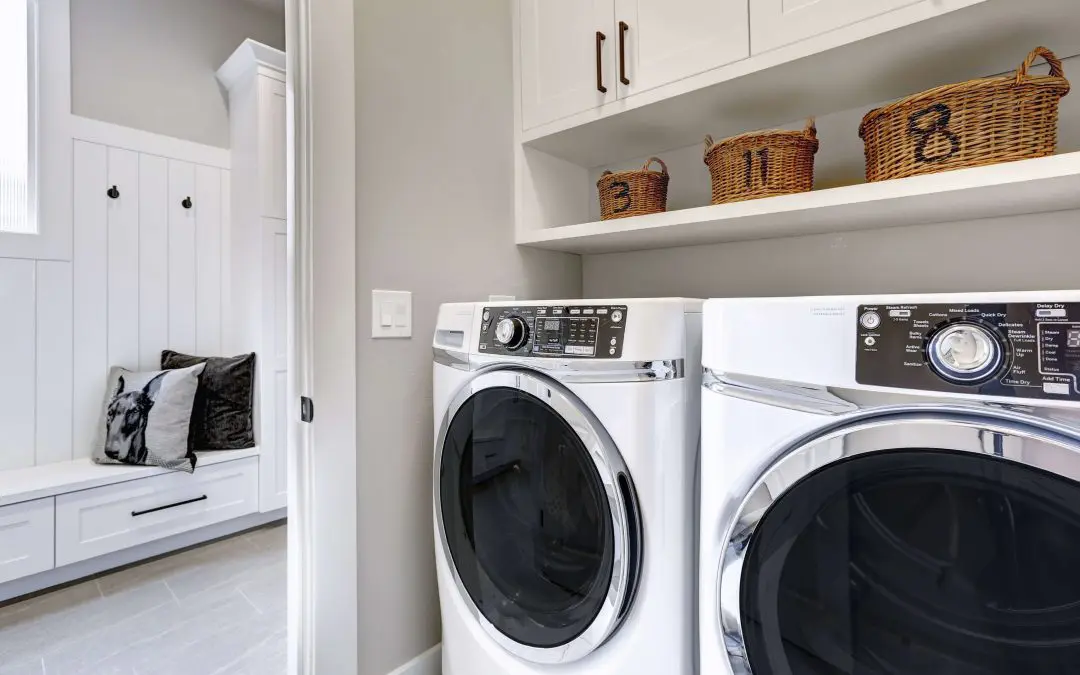
Wall space is your best resource in a laundry room. Install shelves or cabinets above the washer and dryer for detergent, stain removers, and dryer sheets. Use baskets or bins to group items, and label them so everyone knows what goes where. A tension rod across the wall or a wall-mounted drying rack gives you a place for delicates. If floor space is available, a slim rolling cart fits between machines and holds cleaning supplies. Store items you use daily within easy reach, and keep less-used items higher up. Hooks and rails work well for hanging cleaning tools such as a broom, a mop, and an ironing board. If you have a utility sink, a small shelf above it holds spot cleaners and soaking supplies. Group items by task, such as stain treatment on one shelf and fabric softeners on another.
Create a Folding and Sorting Zone
A clear surface makes folding fast. A countertop over front-loading machines works well, or you can mount a fold-down table on the wall. Use separate bins or a divided hamper for whites, darks, and delicates so sorting happens before the wash. Add a basket for items that need mending or dry cleaning. Good lighting makes it easier to spot stains, and a small trash can for lint and dryer sheets keeps things clean. A well-planned laundry room makes folding feel less like a chore. Add a rod nearby where you can hang shirts straight from the dryer to cut down on wrinkles. A small wall-mounted rack holds hangers so they are always on hand. If you have the space, a mesh drying rack keeps sweaters flat and prevents stretching.
Keep Your Laundry Room Clean and Safe
Wipe down machines and shelves regularly, and leave the washer door open between loads to prevent odors. Clean the lint trap after every load and the dryer vent once a year to reduce fire risk. Check hoses for cracks or bulges every few months and replace them if needed. Keep the area around the dryer clear, and store chemicals out of reach of kids and pets. A quick wipe each week keeps your laundry room working smoothly. Make sure the washer sits level and doesn’t vibrate, since a rocking machine wears out parts faster. Keep a small broom or hand vacuum nearby to catch lint and dust.
Frequently Asked Questions (FAQs)
How can I organize a small laundry room?
Use vertical space with shelves, hooks, and over-the-door racks. Stackable machines free floor space. A rolling cart can slide into a narrow gap.
What should I keep in a laundry room?
Detergent, stain remover, dryer sheets, a lint brush, a hamper, and a place to hang or fold clothes are the essentials.
How often should I clean my washer?
Run a cleaning cycle every month or two, and wipe the door gasket regularly to prevent mold. Use a washing machine cleaner or hot water with vinegar.
How do I prevent mildew smells?
Leave the door open between loads, use the right amount of detergent, and clean the gasket and detergent drawer. Using too much detergent can leave residue that fosters odors.
How often should I replace washer hoses?
Every three to five years, or sooner if you see cracks or bulges. Braided stainless steel hoses last longer. Replace both hoses at the same time.
TUFF Home Inspections offers home inspections in New Jersey. Contact us to request an appointment.